By Jake Parks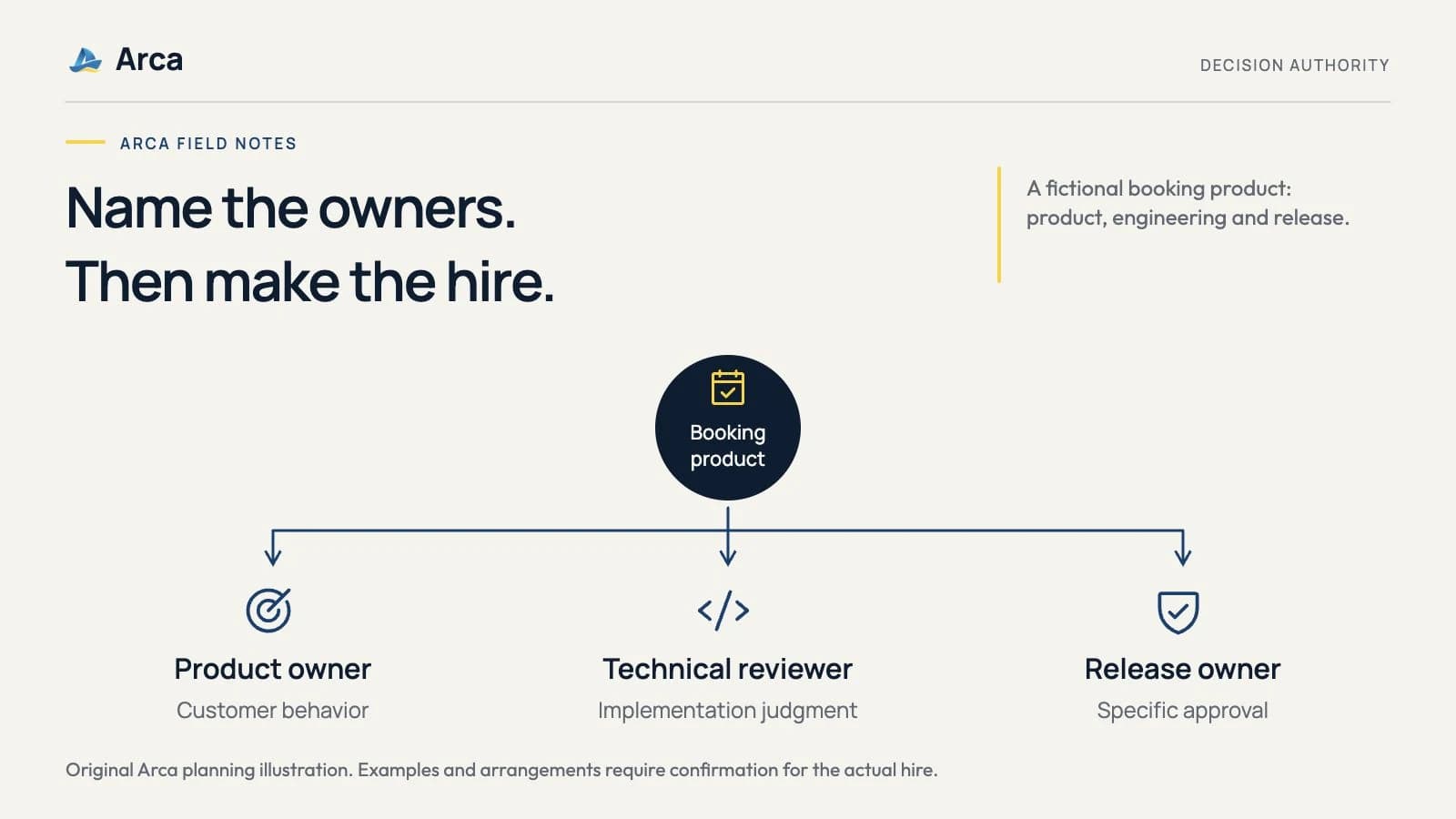
Hiring developers as a nontechnical founder starts with a leadership decision: who can judge the engineering work, approve consequential changes and help the developer when the answer is unclear? You can own the product without personally making every technical decision. You do need a credible person who can make or review those decisions.
For a US founder hiring a software engineer in the Philippines, recruitment and engineering leadership serve different purposes. A shortlist helps you choose a person. Technical direction helps that person work on the right problem within sensible boundaries. Establish both before making the first hire responsible for an entire product by default.
Start with one decision you cannot confidently make
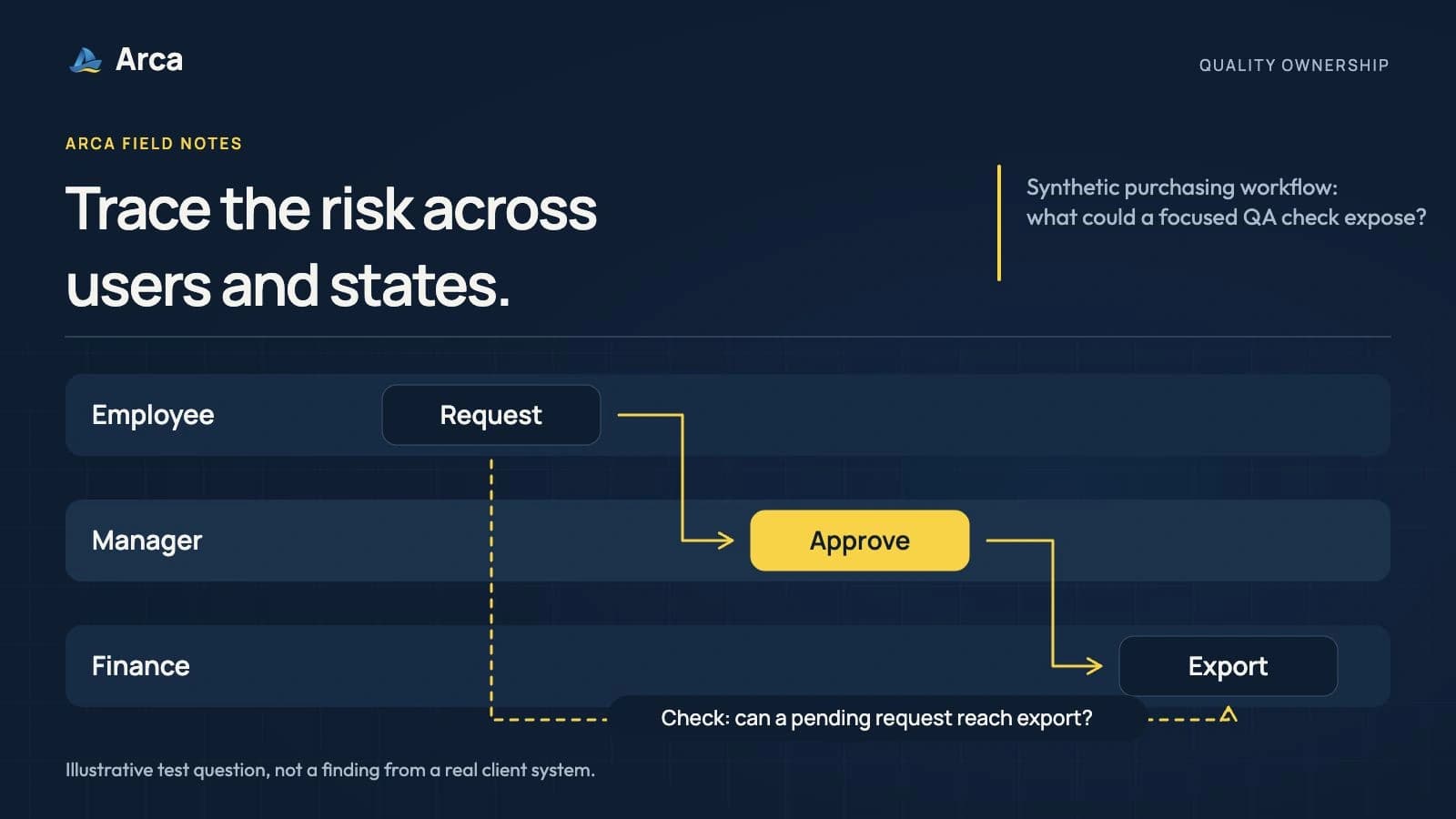
Imagine a fictional appointment-booking startup. Customers sometimes receive two confirmations after rescheduling. The founder knows the intended customer experience but cannot tell whether the problem sits in the interface, payment integration or background jobs.
The next hire might be able to investigate and implement a fix. Somebody still needs to judge the investigation, review changes that affect payments and decide whether the release is safe. Writing “full-stack developer” in the vacancy does not answer those questions.
Before sourcing, bring one representative problem to a technical adviser. Ask them to explain the likely responsibilities, the evidence a candidate should demonstrate and the support the person will need. OPM's job-analysis guidance connects job tasks with required competencies. That is a useful starting method, although its guidance was written for federal hiring.
If you cannot identify a representative problem, clarify the product need first. Our first engineering hire guide helps distinguish implementation capacity from a need for technical leadership.
Draw a small decision map
Use the following as a conversation document. These are proposed responsibilities for the fictional startup, not a required organizational structure or Arca service promise.
| Decision | Accountable person | Input they need | Evidence left behind |
|---|---|---|---|
| What should rescheduling do for the customer? | Founder or product owner | Customer examples and commercial constraints | Agreed behavior, including cancellations and duplicate requests |
| How should the system implement that behavior? | Named technical lead or adviser | Current architecture, failure evidence and developer proposal | Short decision note with alternatives and risks |
| Does the proposed change meet the engineering standard? | Qualified reviewer | Code, tests and deployment implications | Review outcome and unresolved concerns |
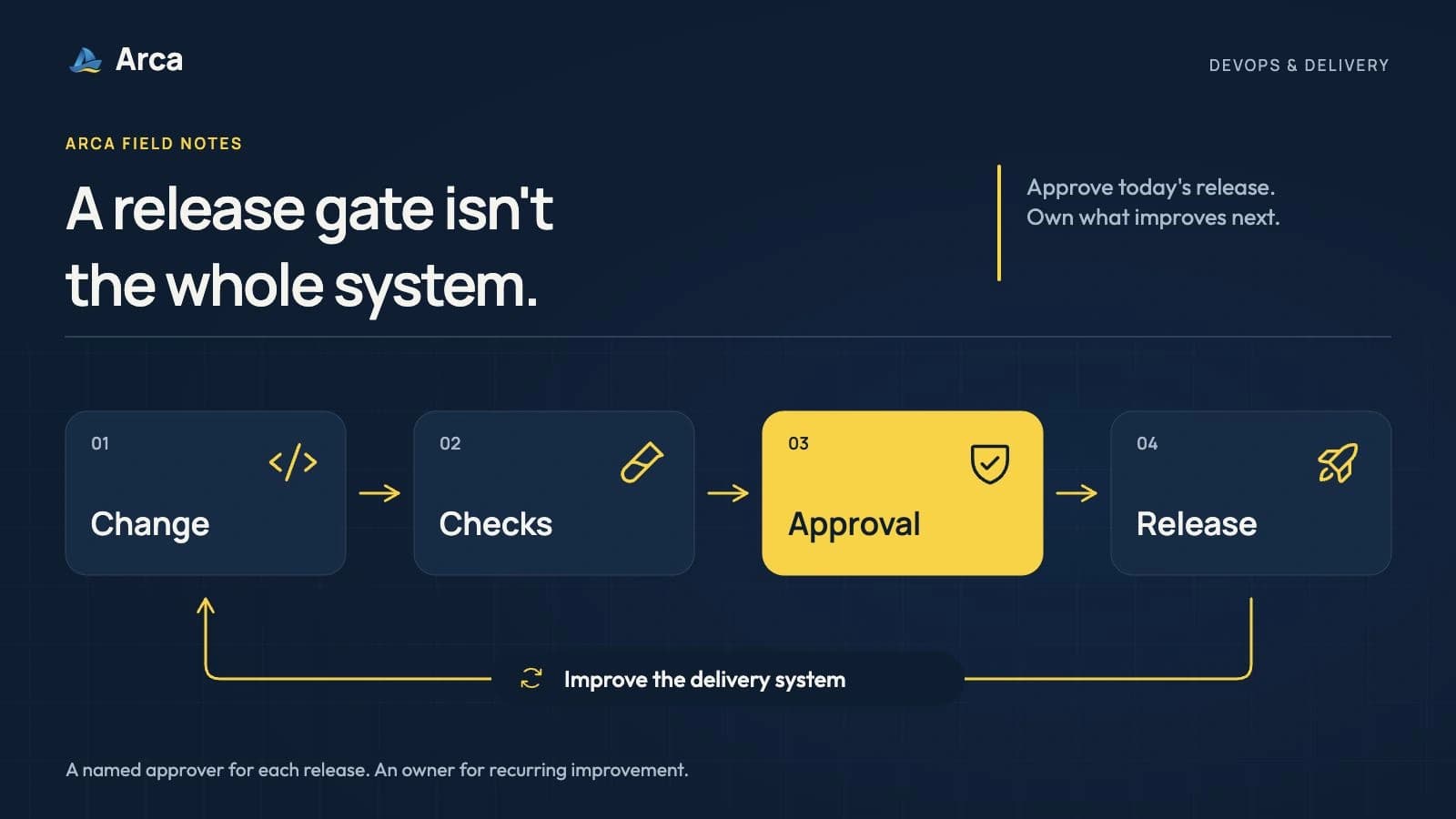
| Can this change reach production? | Authorized release owner | Review result, operational checks and recovery plan | Approval tied to the specific release |
| Is the candidate suitable for this responsibility? | Named hiring decision owner | Consistent technical evidence and verified engagement details | Written hiring rationale and support commitments |
One person can hold several responsibilities when qualified and available. A person who advises on architecture may have no authority over commercial terms. Record the actual boundaries rather than assuming a title supplies them.
GitLab's directly responsible individual guidance illustrates explicit accountability and consultation. Your startup can use a much smaller map; the useful principle is that an important decision has an owner.
Choose technical support that can stay involved
A technical cofounder, employed engineering lead or external adviser may provide the judgment you need. Choose around the decisions and availability, rather than assuming one arrangement always suits an early company.
Discuss three practical situations with the proposed reviewer. Can they help assess candidates before selection? Can they review an unfamiliar change after the engineer starts? Who covers an urgent question when they are unavailable?
An adviser who can attend one interview but cannot inspect the repository later leaves a different gap from a lead who reviews changes every week. Agree the scope, access, compensation and conflicts of interest. Ask whether the reviewer has a commercial interest in recommending a particular agency, stack or rebuild.
Google's code-review guide covers design, behavior, complexity and tests. Use those subjects to discuss the reviewer's work. They do not establish that every adviser is qualified for every system.
Request a small sample of how the person explains a technical decision to a business owner. You should be able to understand what is uncertain, which options remain and what would make them change their recommendation. Avoid requesting confidential code from another employer or customer.
Test the arrangement before the new engineer depends on it
Walk through the duplicate-confirmation scenario together. The founder explains the desired result. The reviewer identifies questions that affect system safety. The recruiter translates the responsibility into candidate requirements.
Then deliberately introduce a missing decision: a customer changed the appointment after payment was authorized. Who decides the business rule? Who can inspect the payment flow? Who may approve the implementation? If everybody expects the incoming developer to resolve all three alone, revise the role or arrange more support.
Record answers where the new engineer can find them. Microsoft's asynchronous collaboration checklist recommends written context and captured decisions. In this example, a short issue with the agreed behavior and named approvers is more useful than an undocumented call.
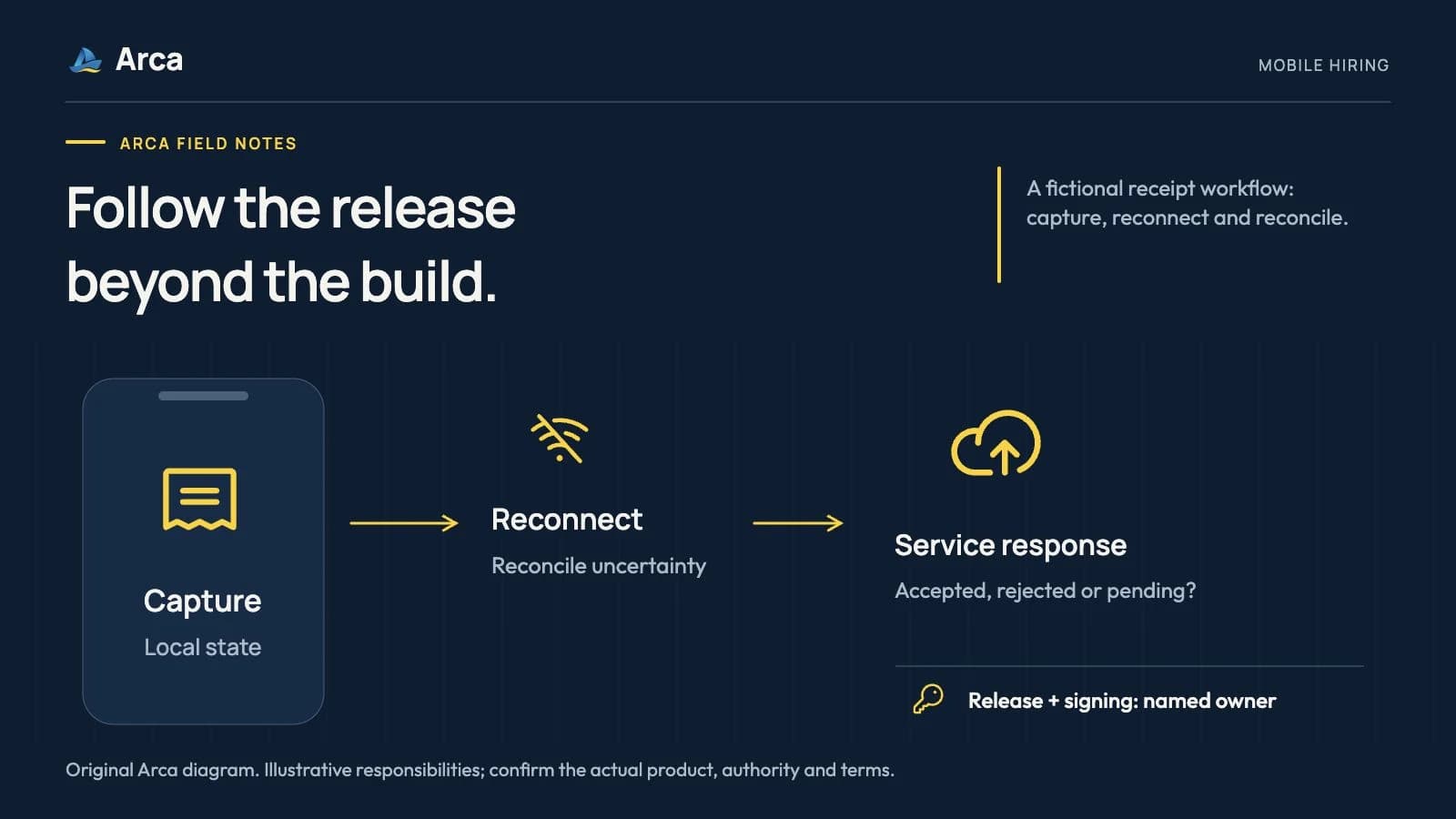
The developer also needs a way to raise uncertainty without waiting for the founder to diagnose it. Agree a place for questions, a practical response window and a backup owner. Confirm working hours with the actual people involved; Philippine location alone does not establish availability.
Bring Arca a responsibility, a reviewer and the open questions
Arca helps companies hire software engineers in the Philippines. Bring the product context, the responsibility you want to fill and the technical support already available. Confirm the scope of recruiting support during the discussion rather than assuming it includes product management, architecture approval or delivery ownership.
Your founder role remains central: choose priorities, explain customer needs and make commercial decisions. Credible technical support lets you make those decisions with clearer evidence.
Capture the result in a shared engineering hiring brief. When evaluating a partner, use our verification guide to check the promised responsibilities against actual terms.
Frequently asked questions
Do I need to become a programmer before hiring a developer?
You need enough understanding to explain the product and make business decisions. Arrange qualified technical judgment for assessment, implementation review and consequential system changes.
Can a fractional technical adviser provide the support?
Possibly. Confirm their relevant expertise, actual availability, review responsibilities, access, compensation and backup. One interview does not establish ongoing support.
Should the first developer approve every technical change?
Only where the person has the competence and explicit authority. Name reviewers and release approvers according to product risk and the team’s actual support.
Who decides what customers should experience?
The product decision owner should agree customer behavior and priorities, using technical input on constraints. The engineer should not have to invent unresolved business rules.
What should I bring to the Arca discussion?
Bring a representative product problem, current system context, the responsibility you want to fill and the technical support available. Confirm service scope and actual terms in the discussion.