By Jake Parks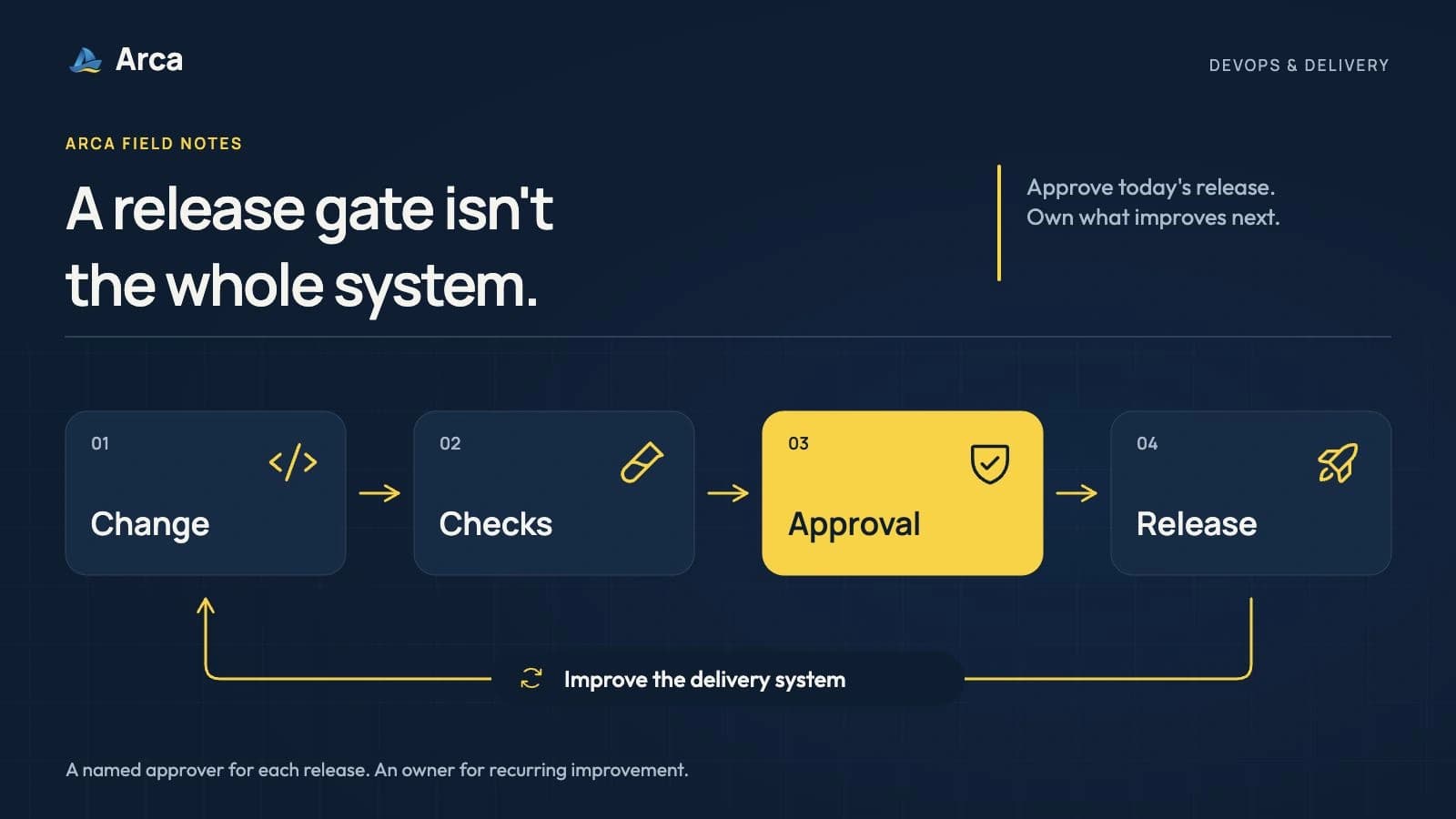
Consider hiring a DevOps engineer when delivery and infrastructure responsibilities need sustained specialist attention that your current team cannot provide. Useful signals include recurring deployment problems, fragile environment setup, unresolved recovery work and a senior developer repeatedly pulled away to keep the delivery system running.
A difficult release is a reason to investigate. It does not automatically justify a new full-time role. First determine whether the constraint is technical work, missing ownership or a product decision that no infrastructure specialist can resolve.
For US teams considering a Philippine DevOps engineer, the goal is a clear engineering responsibility with agreed access, review and coverage. Hiring offshore changes the working arrangement; it does not remove the need to define what the role will own.
Examine the work that repeatedly interrupts delivery
Take a recent week of work and list the interruptions: a failed release, an environment difference, a noisy alert, a manual configuration change or a restore procedure nobody has practiced. Record who dealt with it and what would prevent the same interruption next time.
Google's SRE book describes operational toil as work with characteristics such as being manual, repetitive and lacking lasting value. That provides a useful distinction: responding to a recurring problem and engineering away its cause are different uses of a person's time.
Do not choose a hire from a time percentage alone. A rare task can still carry significant risk. The important question is whether the team can responsibly perform both the immediate work and the improvements needed for the product's next stage.
Map the bottleneck to a responsibility
Use this original matrix to prepare a discussion with your engineering lead. It points to possible work, not a universal job-title boundary.
| What the team observes | Work to investigate | Candidate evidence | Boundary to settle |
|---|---|---|---|
| Releases depend on one person's manual steps | Repeatable build, deployment and recovery process | Explains how another engineer can release safely | Application developers still own the behavior they ship |
| Staging and production behave differently | Configuration and environment lifecycle | Reasons about drift, changes and verification | Named owners approve access and sensitive settings |
| A failed release takes too long to diagnose | Useful signals, release records and recovery playbooks | Connects a symptom to evidence and a safe next action | Incident authority and escalation need explicit agreement |
| Several teams repeat infrastructure setup | Shared tooling or platform capabilities | Can simplify a workflow for its actual users | Product teams contribute requirements and feedback |
| Repeated interruptions displace improvement work | Sustainable operational coverage and follow-up | Describes prioritizing corrective engineering | One person is not a complete coverage rotation |
You might find a platform engineering role, a cloud specialist or an SRE responsibility within this map. You might also find a bounded improvement an existing engineer can make with appropriate support. Choose the role after examining the work.
For the broader choice between application and operations roles, our first engineering hire guide provides a starting point.
A release problem that needs two different decisions
Imagine a fictional US scheduling-software company. Its product engineers can implement features, but a release requires a senior engineer to compare environment settings manually. When a change fails, the team is unsure which configuration version was used.
The first decision is technical: make the deployment path understandable and repeatable, record the relevant configuration and verify recovery. The second is organizational: decide who can approve a production change and who supports it afterward.
A DevOps engineer could investigate the technical path, make a bounded improvement and help document the operating procedure. That hire cannot independently decide which customer risks the company accepts, approve their own unrestricted access or promise coverage outside the engagement.
DORA's continuous-delivery guidance describes keeping software releasable through technical practices and collaboration. It also distinguishes continuous delivery from automatically deploying every change. The company's aim can be a reliable, repeatable release process while retaining appropriate approval for production.
If the team uses GitHub Actions, for example, its environment documentation explains deployment protection rules and reviewers. Availability depends on the repository and plan. A candidate should discuss the controls actually available, rather than assume an approval mechanism exists everywhere.
Write the first assignment before listing tools
For the scheduling company, a useful opening assignment is: document the existing release path, identify the configuration risks and implement an agreed improvement that another engineer can operate.
Then specify the environment and responsibilities:
- Which cloud, deployment platform and repository the product currently uses.
- Which changes the engineer may make and which need review.
- What secrets, customer data and infrastructure they need access to.
- Who owns application tests and who maintains the delivery workflow, including investigating failed checks with developers and QA where available.
- How the team will verify the improvement and maintain it after handover, including any application-specific evaluation needed before a release.
When infrastructure is managed through Terraform, state deserves explicit attention. HashiCorp's state documentation explains how it maps configuration to real resources. Ask a relevant candidate to reason about existing resources and state before making a change. Naming Terraform on a résumé does not establish that judgment.
Do not require every container, cloud and monitoring tool. Depth in your actual environment and a careful approach to unfamiliar systems are more useful starting points for the search.
Evaluate a safe investigation, not a dramatic rescue
Give candidates a synthetic deployment history, a simplified environment diagram and a report that one version failed while the previous version worked. Explain what information is missing and ask for an investigation plan.
Look for an ordered approach: establish user impact, inspect the change and available signals, limit unnecessary changes, identify a reversible action where possible and explain when to involve another owner. A good candidate should recognize that reverting application code does not necessarily reverse a data or infrastructure change.
Ask how they would leave the team better prepared afterward. Useful evidence includes a clear change record, an appropriately scoped check, a tested operating procedure and a handover another engineer can follow. Evaluate technical reasoning and communication together.
Agree assessment scope, tool use and compensation where appropriate. Use synthetic material rather than giving a candidate production credentials to prove they can work under pressure. Our developer interview guide covers consistent evidence gathering and debriefs.
Agree coverage separately from improvement work
The job title does not define an on-call arrangement. State the working window, incident contact, escalation route, backup coverage and any separately agreed response expectations. Confirm the candidate's actual availability and commercial terms before hiring.
Arca helps US companies hire DevOps and other engineers in the Philippines through role-specific screening and matching. Bring your recurring delivery problems, environment and available technical support to the conversation. Your team chooses the engineer and directs priorities; discuss any managed operational service or project-delivery requirement explicitly.
If the work is a discrete migration or setup project, our staff augmentation versus project outsourcing comparison helps clarify who should organize delivery, accept the result and support it afterward.
Frequently asked questions
How many developers should we have before hiring DevOps?
There is no universal headcount trigger. Examine the recurring infrastructure and delivery work, failure consequences, improvement backlog and support your existing team can responsibly provide.
Does a managed hosting platform remove the need for DevOps work?
It can reduce infrastructure work, but your team still needs owners for configuration, deployment, access, useful checks and recovery. Decide whether that remaining work needs a specialist in your actual environment.
Is DevOps the same as SRE or platform engineering?
The responsibilities overlap, but titles vary by company. Specify whether the dominant need is delivery automation, shared developer tooling, cloud infrastructure or service reliability rather than relying on a label.
Can one offshore DevOps engineer provide 24/7 support?
Do not infer continuous coverage from one hire. Agree working hours, escalation, backup coverage and any response expectations explicitly with the candidate and engagement.
Can Arca help hire a DevOps engineer in the Philippines?
Arca publicly supports DevOps engineering searches alongside other technical roles. Share the environment, recurring problems, expected responsibilities and available reviewers so the search can match the actual role.