
AArca Editorial
How to Interview an Offshore Full-Stack Developer
A worked interview plan for US teams hiring offshore engineers, with a fictional full-stack task, a reusable scorecard, and a sample hiring debrief.
Hiring Tips
Compare two offshore engineering arrangements through a fictional product role and a bounded project, with questions about direction, acceptance, and support.

Choose offshore staff augmentation when you need engineers working within a team you direct. Consider project outsourcing when you want a provider to organize delivery of an agreed piece of work. Both arrangements can involve offshore developers. The important difference is how you divide day-to-day decisions, technical responsibility, acceptance, and support.
Before comparing providers, write down the work you need done and the decisions your team can make. A company with an active product team has different needs from a founder looking for someone to scope and deliver a separate application.
This guide compares those choices through two fictional software projects, then gives you a brief you can use in a provider conversation.
Imagine a US subscription-software company with a product manager, an engineering lead, and an existing development team. It is considering offshore engineering help for two pieces of work.
The product manager expects to revise priorities as customers use new account-management features. The engineering lead can explain the architecture, review changes, and support another developer. Work will continue after the current feature list is complete.
An additional full-stack engineer could join that team's planning, repository, and review process. Staff augmentation is worth considering because the company has a continuing engineering responsibility to fill and people available to direct and review it.
The brief should describe what the engineer can own, the experience required, the collaboration window, and who can unblock a product or technical question.
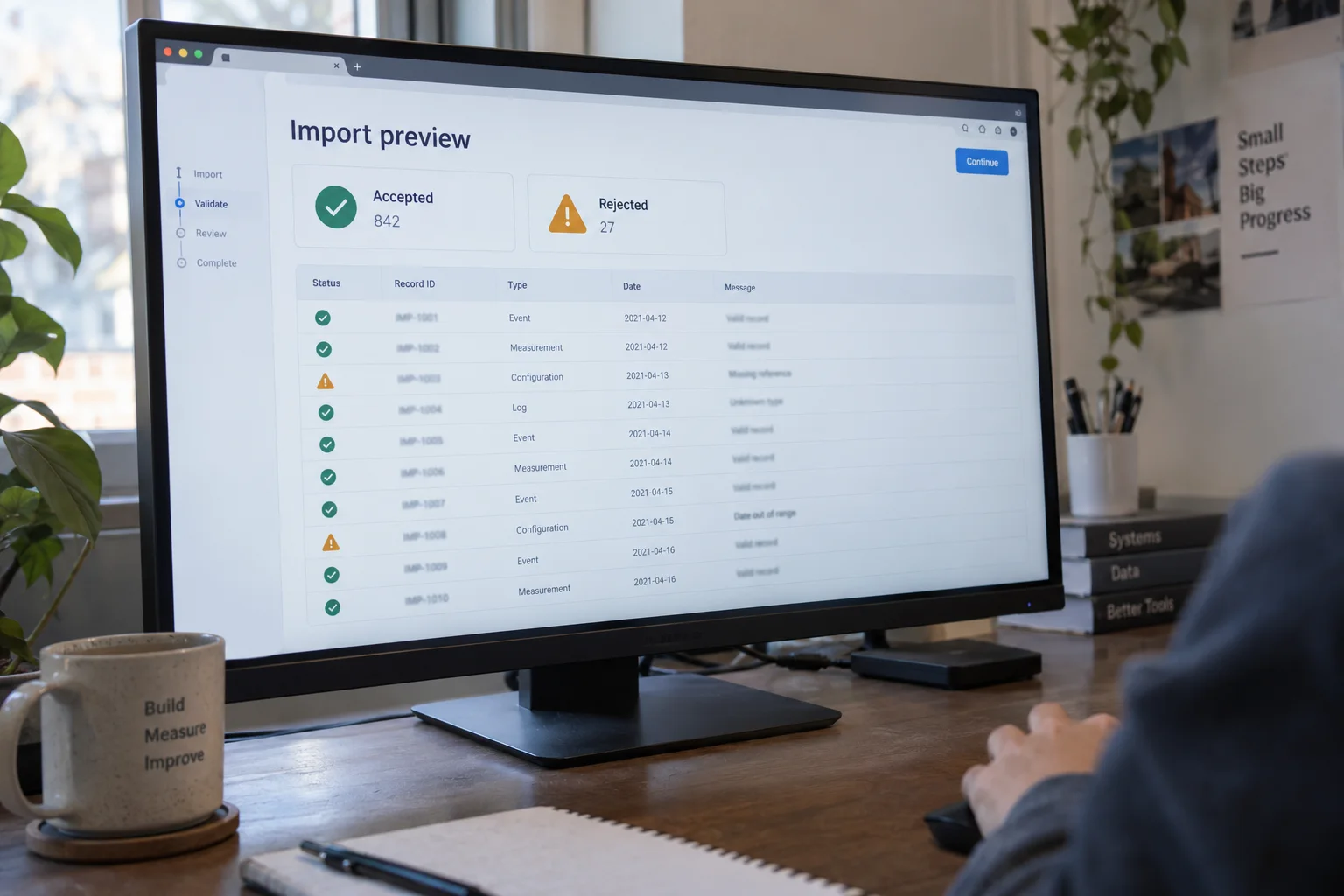
The same company needs to import invoice records from an older system. It can provide sample files, explain the target fields, and identify someone who can confirm whether the imported records are correct.
A project engagement is worth considering if the company and provider can agree on the boundary: supported file formats, validation rules, test data, handling of rejected rows, and what happens when the import runs again. They also need to agree who runs it, what handover includes, and who supports it afterward.
That is more specific than asking for “one developer for a few weeks.” The company may want the provider to plan and deliver the importer, rather than manage an additional person through each implementation task.
Neither example establishes a universal rule. An internal team could build the importer, and an external delivery team could support a changing product. The examples expose the responsibilities that need agreement before either arrangement makes sense.
Offshoring and outsourcing describe different aspects of an arrangement. A 2024 OECD working paper distinguishes the location of an activity from whether it is performed within the business or by an external supplier. Work can be outsourced domestically or internationally; an offshore operation can also sit within a company's own organization.
For this software-hiring comparison:
Here, project outsourcing is the specific alternative to team augmentation. The broader term “outsourcing” can include many kinds of external service, including staff augmentation. Treat a provider's labels as a starting point, then inspect the actual responsibilities in its proposal.
For each option, ask who will perform the work, who can make a decision, and what your team must supply. A proposal that leaves those answers unclear is difficult to compare even when its price is precise.
| Decision | Staff augmentation arrangement to examine | Project outsourcing arrangement to examine |
|---|---|---|
| Daily priorities | Your team directs the engineer's work and resolves competing priorities | Provider organizes delivery within agreed priorities and scope; your business still supplies decisions and feedback |
| Technical direction | Name the lead who guides architecture, reviews, and integration | Ask who provides technical leadership and how your team reviews important choices |
| Definition of completion | Your product and engineering process determines when each change is ready | Agree deliverables, acceptance checks, exclusions, and the person who accepts the work |
| Changes in requirements | Reprioritize through your team while considering capacity and dependencies | Define how changes affect scope, sequencing, schedule, and charges |
| Working relationship | Engineer participates in the routines and tools needed for the role | Agree access to delivery staff, demonstrations, reviews, and an escalation route |
| After delivery | Ongoing maintenance is allocated within your team and engagement | State the handover, support period, exclusions, and route for subsequent work |
These are proposed comparison questions, not standardized contract terms. A managed team or hybrid arrangement may divide them differently. In particular, a “dedicated team” label does not tell you who provides product management or technical leadership.
The UK's Sourcing Playbook provides an institutional example of assessing delivery options against capabilities, risks, and whole-life costs. It is public-sector guidance, not a rule for US private companies. The useful starting principle is to assess the work and your available capabilities before committing to a delivery model.
Return to the customer account area. If the engineering lead has a coherent queue of work and review time, another engineer may address a capacity gap.
If the team cannot agree what the feature should do, adding developers leaves that product decision unresolved. If no one can explain the existing system or assess a proposed change, the team needs technical leadership as well as implementation capacity. That leadership might be an existing employee, an appointed external lead, or a clearly included provider responsibility.
The same distinction applies to the importer. A provider can investigate technical options, but someone must still explain which records matter and confirm that the result meets the business need. “The vendor handles everything” leaves an important question unanswered: who can resolve a requirement only your company understands?
Before choosing a model, identify the missing contribution:
These contributions can be combined, but they should be visible in the proposal. If an integration is poorly understood, a bounded investigation may be a better first engagement than an optimistic promise to deliver the entire system.
Use the two fictional requests to draft different briefs.
For the ongoing product role:
We need a full-stack engineer to improve the customer account area in our existing application. Our product manager sets priorities, and our engineering lead provides technical direction and review. The engineer will work in our repository and participate in the agreed planning and collaboration window. We will define the initial responsibility and the support available before interviewing.
For the importer project:
We need a repeatable way to import the agreed historical invoice files into our application. The provider should investigate the supplied samples, propose an implementation, and demonstrate the agreed validation checks. Our finance owner confirms the data rules; our engineering lead reviews integration and release. The proposal should identify deliverables, exclusions, dependencies, acceptance, handover, and post-delivery support.
Neither brief is a complete specification or contract. Each makes the next conversation more useful by showing which decisions are already assigned and which remain open.
If you are still choosing a sourcing channel, our guide to finding and hiring offshore software developers covers that earlier decision. Once the engagement calls for an individual engineer, use a job-relevant developer interview to evaluate the responsibilities of that role.
Before work starts, discuss the situations that could otherwise become an argument during delivery.
When a requirement changes, who decides? Name the person who can approve the product change and the technical lead who can explain its impact. Agree when that discussion changes the planned work or commercial scope. A fixed quote and a time-based quote create different pricing questions; neither automatically defines who manages delivery.
Who can approve access and release a change? Identify the necessary repositories, environments, and data, along with the people who authorize access and production changes. NIST's Secure Software Development Framework, version 1.1 includes defining and maintaining development roles and responsibilities for people inside and outside an organization. Use that as a prompt to make security responsibilities explicit across the engagement.
Where will important technical choices be recorded? Microsoft's design decision-log guidance describes recording a decision's context and consequences. For the importer, useful records might explain why a file format is supported, how duplicate records are identified, and which assumptions require review. Keep the level of documentation proportionate to the work.
What must another engineer receive at handover? Agree the source repository, setup instructions, configuration dependencies, checks completed, known limitations, and support contacts. Clarify the commercial terms for ownership and access to deliverables; do not infer them from the engagement label. Ask how access changes when the engagement ends and who can maintain the result.
What will your own team spend time doing? Compare provider charges alongside the internal effort each option needs for product decisions, technical review, coordination, acceptance, and continued support. This is a comparison of responsibilities, not a claim that either model is always cheaper.
If your need is engineers joining an existing product team, Arca matches software engineers in the Philippines to your role, stack, seniority, and working needs. Its public working model describes engineers joining your tools, repository, routines, and roadmap while your team directs priorities.
Bring the ongoing-role brief above to a discovery call, including who provides technical direction and what the engineer should own. If you need a provider to scope and deliver a separate project, make that requirement explicit and ask whether the proposed service includes it. Do not assume an engineering hiring arrangement includes project management or a finished deliverable.
The decision is useful when it produces a clear next step: a role to hire, an outcome to commission, or an uncertainty to investigate before either one.
It can be described that way because the engineers are supplied externally. This guide compares team augmentation with the narrower model of outsourcing delivery of a project. Offshore describes the cross-border location of the work; it does not settle the delivery arrangement.
Compare proposals for the same work and responsibilities. Include your team's time and the support needed after delivery, alongside the provider's charges. A lower monthly or project price is not directly comparable if the other proposal includes leadership, testing, or support that you still need to arrange.
The relevant question is who can provide product decisions and qualified technical direction, rather than whether someone has a particular title. An external technical lead or an explicitly managed delivery arrangement may fill part of that need. Confirm the actual responsibilities and the time those people can provide.
You can discuss that transition with a provider, but it is not automatic. Agree what happens to the work, documentation, access, staffing, and support when the initial project ends, including any commercial terms for the next arrangement.
A worked interview plan for US teams hiring offshore engineers, with a fictional full-stack task, a reusable scorecard, and a sample hiring debrief.

See how Arca matches vetted software engineers in the Philippines to your role, stack, and team, with a focused shortlist and support after the hire.

A practical guide for US teams choosing where to find offshore developers, writing a useful role brief, comparing hiring partners, and assessing candidates.