By Jake Parks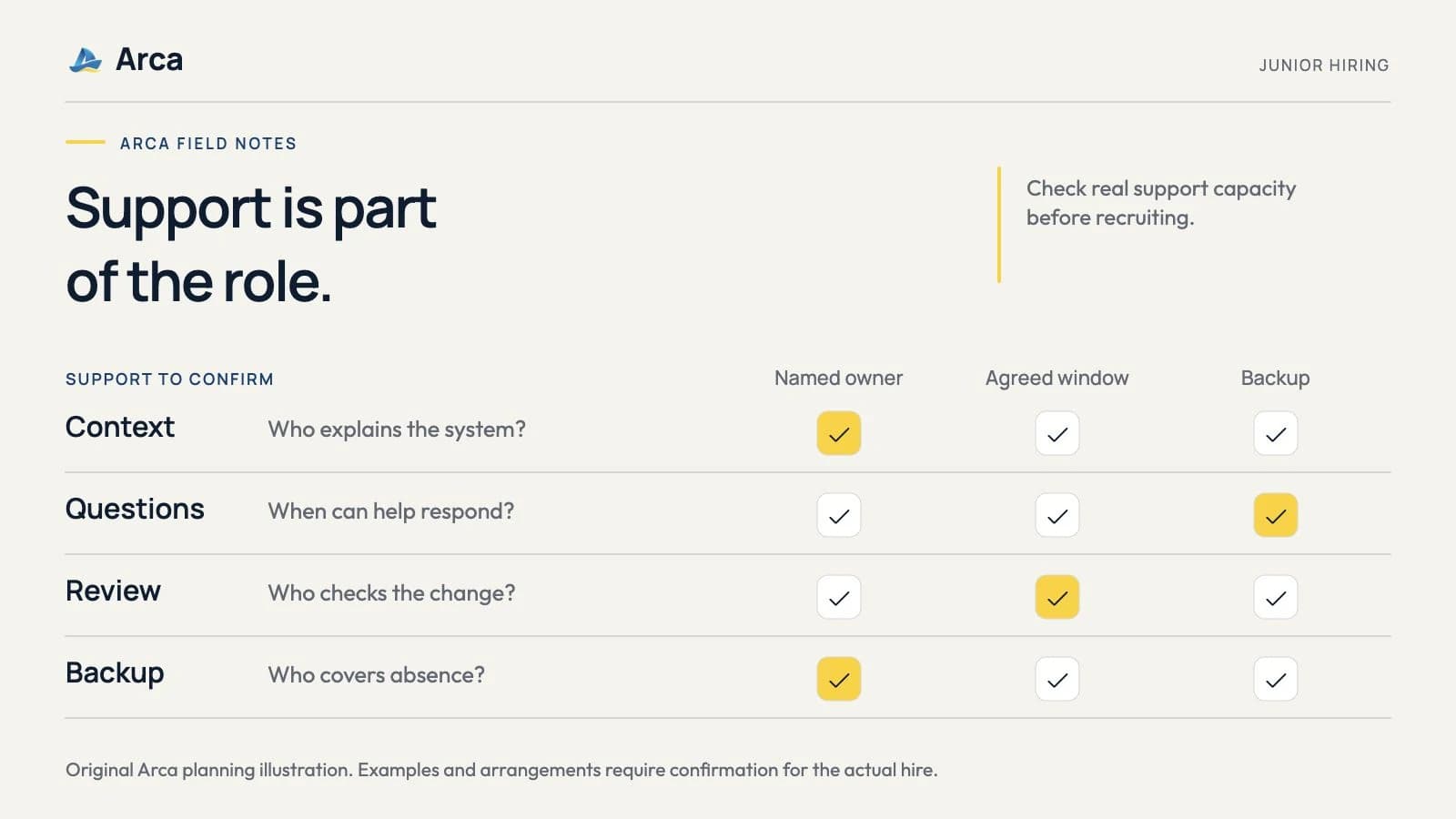
A junior offshore developer can be a sensible hire when the work is teachable and your team can provide dependable technical support. Before opening the role, check who will explain the system, review changes, answer questions and adjust the assignment when the engineer needs help.
The decision is about the learning environment as well as the candidate. A lower quoted rate cannot tell you whether your team has the capacity to develop an early-career engineer. For a US team hiring in the Philippines, that support also needs to work across the agreed collaboration hours.
Inspect the work before choosing the level
Take a fictional inventory application. The team wants to add an explanation beside an unavailable stock quantity. A product owner can define the message. An existing engineer understands the API and can identify whether availability is trustworthy. The change can be reviewed in a test environment.
That assignment offers a possible learning path. Asking the same incoming junior to redesign inventory consistency, diagnose unexplained stock losses and approve releases alone would be a different role.
Identify the decisions the new person can make with guidance and those requiring experienced judgment. OPM's work-sample guidance distinguishes competencies needed on entry from those learned after joining. Apply that distinction to your vacancy: assess the foundations you need now and describe the support for what comes next.
Run this support check with the proposed mentor
Use the worksheet in a meeting with the actual people who would support the hire. It is an original planning tool, not a validated hiring score. Do not total the rows into an automatic pass mark.
| Support question | Evidence to write down | If it is missing |
|---|---|---|
| Who understands the area the junior will change? | Named mentor and backup with relevant system knowledge | Narrow the assignment or arrange experienced support first |
| When can the engineer get an answer? | Agreed response windows and a route for urgent blockers | Adjust collaboration hours or provide another contact |
| Where can they practice safely? | Test environment, synthetic data and a clear access boundary | Prepare the environment before expecting contribution |
| Who reviews the work? | Reviewer who has reserved capacity and can explain feedback | Reduce simultaneous work or revise the staffing plan |
| What does learning look like? | Small progression of responsibilities and review conversations | Make the learning expectations explicit |
| What happens when the mentor is away? | Cover for questions, review and release decisions | Add cover or pause dependent work |
“The senior engineer can help” is incomplete if that engineer is already committed to launches and incident response. Look at the calendar and current review queue together. Reserve practical support time without inventing a universal mentor-to-junior ratio.
GitLab's support engineering mentorship guidance describes mentoring as support for learning rather than taking over the issue. It is one company's practice, not evidence of a guaranteed learning timetable.
Design a first assignment that can be discussed
For the inventory example, the mentor can first explain where the stock value comes from and which states the interface must distinguish. The junior might then trace the current behavior, propose the explanatory message and implement a bounded change with tests.
Agree what the engineer should bring to review: the intended behavior, what changed, how it was checked and any uncertainty. Ask the reviewer to explain the reason behind requested changes. Google's code-review standard balances progress with improving code health; it does not require perfect code before learning can proceed.
Keep product acceptance and engineering review separate. The product owner can confirm that the wording helps users. The technical reviewer checks whether the change handles the actual system states. A screenshot alone cannot demonstrate that both decisions are resolved.
If AI tools are allowed, explain the permitted tools and data boundaries. Ask the engineer to understand and verify any generated changes. Tool access does not replace a reviewer, and a candidate should not have to disclose another organization's confidential material to demonstrate learning.
Make help accessible across time zones
A question left in chat at the end of one person's day can block the next person's morning. Agree where questions go and what context makes an answer possible: the relevant issue, expected behavior, observed behavior and attempted checks.
Microsoft's async collaboration checklist recommends written context, accessible summaries and captured decisions. For this role, keep a small shared record of explanations the engineer is likely to need again. Use a live conversation when writing alone is not resolving the uncertainty.
Confirm the actual working arrangement with both mentor and candidate. Our guide to US–Philippines engineering overlap covers the schedule decision; location does not establish that either person will work a particular shift.
Decide what your team can responsibly offer
If a mentor, reviewer and bounded assignment are available, describe them in the role brief. If the team needs someone to make unfamiliar architectural decisions immediately, reconsider the level or arrange additional leadership. Do not call a vacancy junior while quietly expecting sole ownership of a fragile product.
Bring that support picture to Arca when discussing a Philippine engineering hire. Confirm the actual role, experience and engagement requirements rather than assuming a particular junior programme or placement is available.
For preparation after selection, use the first-month onboarding guide. This readiness check decides whether your team can support the role before recruiting; onboarding then turns the agreed support into day-to-day practice.
Frequently asked questions
Is a junior developer suitable as the only engineer?
It depends on the work and experienced support available. A vacancy requiring independent architecture, system diagnosis and release judgment may need a different level or additional leadership.
How much mentoring time should we reserve?
Inspect the actual assignment, learning needs and mentor workload. Agree practical support windows and revisit them; there is no universal allocation in this worksheet.
What should an entry-level assessment measure?
Measure foundations needed on entry. Explain which tools and system knowledge the team expects to teach, and use a bounded task with agreed conditions.
Can AI tools replace the mentor?
AI tools may support learning under an agreed policy, but they do not supply accountable technical review or knowledge of your product’s decisions and constraints.
What happens when the mentor is unavailable?
Name a backup for questions, review and necessary approvals. Narrow or pause dependent work where adequate support is absent.